About the Day
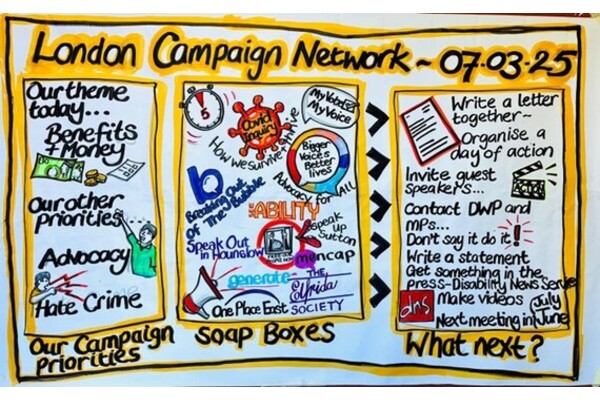
On 5th February, we held our fourth London Campaign Network meeting.
It was a day full of energy and ideas. Also, being reunited with peers we had not seen for a while brought real happiness into the room.
Over the 18 months we have gone from strength to strength building the network and agreeing what to prioritise together. It was great to see how far we have come since our very first meeting. This was a proud and meaningful moment for everyone involved.
Why This Meeting Was Important
At previous meetings, we spoke about:
• Self-advocacy
• Benefits
• Speaking up for our rights
At this meeting, we focused on hate crime. This topic is very important.
Hate crime continues to affect many of us, as people with learning difficulties/disabilities are often targeted.
Many of us do not feel safe reporting hate crime.
Some members shared that they have reported hate crimes to the police.
Some have spoken to healthcare services.
But many people said they do not always feel listened to
Some said:
• Their cases were not taken seriously
• Their cases were closed too quickly
• They had to chase the police for updates
• The police did not understand how to deal with someone with learning difficulties/disabilities
Because of this, some people said they no longer report hate crime.
They feel it is easier to deal with it alone.
This can make people feel:
• Powerless
• Unheard
• Unsupported
This is why the meeting was important.
It gave people a safe space to speak openly.
People were able to:
• Share their experiences
• Be listened to
• Feel believed
• Let go of feelings they had been holding inside
Who Attended
Over 50 people attended the meeting.
People came from different self-advocacy groups across London.
The energy in the room was positive and supportive.
Jon Abrams was the Guest Speaker from Inclusion London
Jon spoke about:
• What hate crime is
• How to tackle it
• Why we must continue campaigning
He explained that hate crime is not always about just one part of a person’s identity.
Sometimes, people are targeted because of more than one thing about who they are.
This is called intersectionality. Intersectionality means that different parts of a person’s identity overlap.
These different parts can increase the risk of discrimination or hate crime.
For example, a person may have a learning difficulty/disability. But they may also be Black. Or they may be Muslim. Or they may belong to another minority group.
This means they are not only at risk because of their learning difficulty/disability.
They may also be targeted because of their race or faith.
So the hate they experience is not just about disability. It can be about disability and race. Or disability and religion.
For example, someone may experience hate crime because of:
• Their disability
• Their skin colour
• Their religion
• Their gender
Hate crime towards people with learning difficulties/disabilities can happen in different ways, such as:
• Verbal abuse
• Being called names
• Being laughed at
• Being mocked for the way you walk, talk, or learn
• Being treated as less intelligent
• Being bullied online
• Being excluded or intimidated in public
Hate crime does not only happen face to face.
It can also happen online through social media.
Jon said stopping hate crime will take time.
It will not stop happening from one campaign alone.
We must keep working together.
He said there is “power in numbers”. If we stand together and keep speaking up, our voices are stronger.
What Members Said
Many members shared their own experiences.
One member said:
“The police don’t do anything. Don’t go to the police. Go to your local organisation.”
This shows that some people do not trust the police because of past experiences.
Another member said:
“You have to retrain the police to make sure they know how to handle people with learning disabilities better.”
This show how important proper training is to understanding the needs of people with learning disabilities.
Group Activity Ideas for Change
During the day, we worked in groups. We brainstormed ideas about what needs to change.
Some of the ideas included:
Reporting and Support
• Encourage people to report incidents
• Support each other after hate crime
• Work more closely with local organisations
Police and Training
• People with learning difficulties/disabilities should help train the police
• There should be mandatory training for police
• The police should work more closely with our community
• There should be more police presence on the streets
Some members felt that more police presence could help prevent hate crime.
Schools and Awareness
Members suggested that disability awareness should start from a young age.
They proposed that people with learning difficulties/disabilities and disabilities should work in partnership with the Metropolitan Police to visit schools across London and, where possible, nationally.
The aim would be to:
• Speak directly to children about disability awareness
• Challenge negative stereotypes
• Promote understanding and respect
• Reduce stigma before it becomes harmful behaviour
Members highlighted that prejudice is often learned at a young age. Early education can help prevent negative attitudes from developing and reduce the likelihood of future hate crime.
By hearing directly from people with lived experience, children would gain a better understanding of learning difficulties/disabilities and the impact of discrimination.
Safe Spaces
Members also discussed the importance of creating visible and trusted safe spaces within communities.
These would be places people could go immediately after experiencing hate crime in a public setting.
This is especially important for young people.
Safe spaces could include:
• Corner shops
• Community centres
• Local organisations
• Libraries
• Office buildings
• Other clearly marked safe locations
These spaces would provide a temporary place of refuge where someone could:
• Feel safe
• Calm down
• Contact support
• Report the incident if they choose to
Information and Accessibility
• More accessible information about hate crime online
• Easy Read materials about hate crime
• Clear guidance on who to contact when hate crime happens
How People Felt
Many people said they enjoyed the day.
They felt:
• Listened to
• Respected
• Empowered
• Valued
People felt they were part of something important and want to continue to work together to improve the lives of people with learning difficulties/disabilities across London.
Moving Forward
We must continue to:
• Speak up
• Support each other
• Raise awareness
• Push for better training
• Demand real change
Hate crime is not acceptable.
People with learning difficulties/disabilities deserve to feel safe.
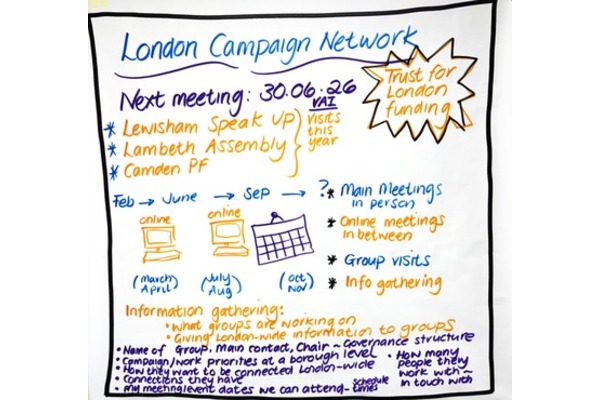
In 2026 we want to strengthen links with the GLA (Greater London Authority) and the Mayor's Disability Plan.
There is power in our voices. There is power when we stand together.
Our campaigning continues.